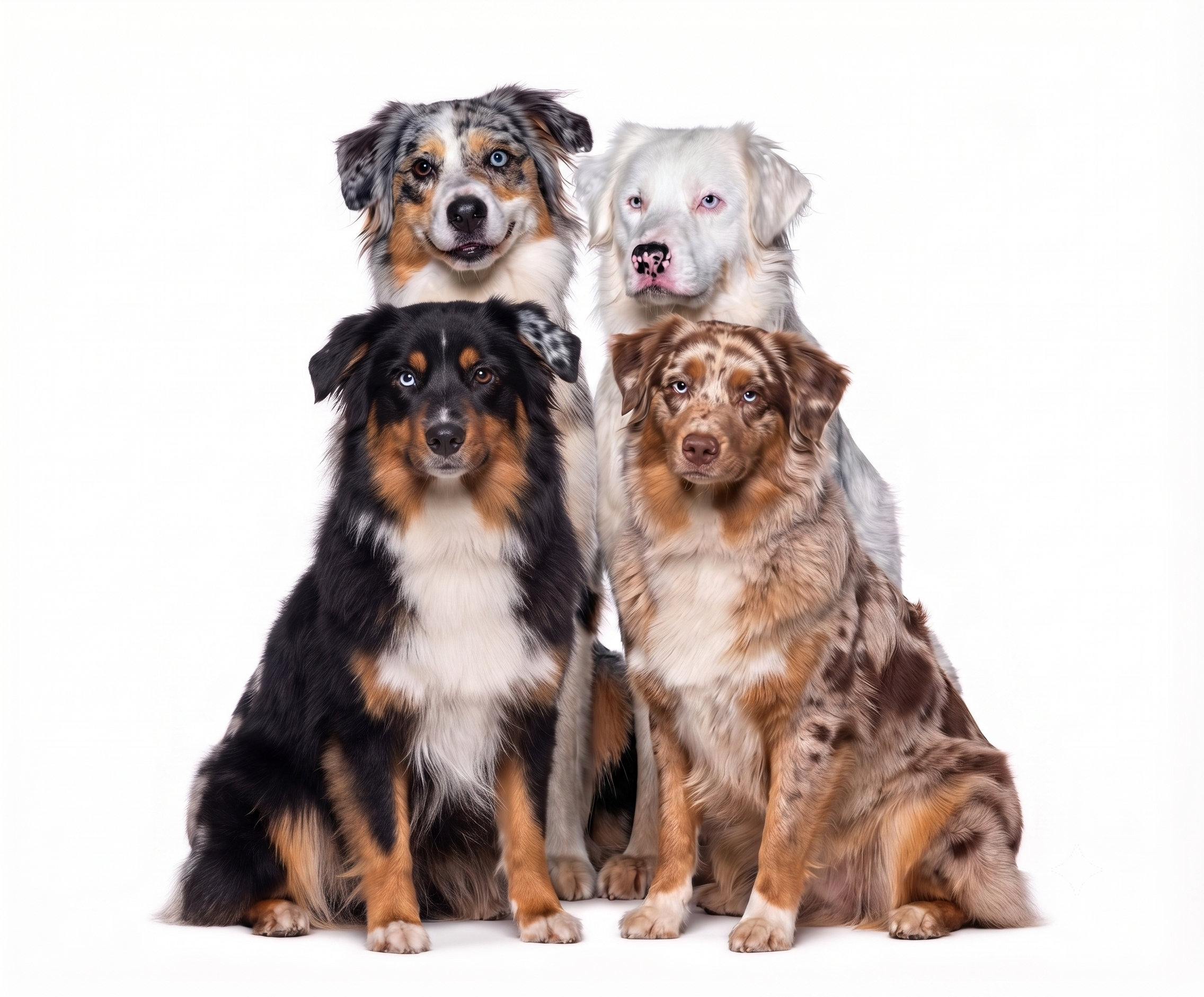
The "merle" (marbled) coat pattern always looks exotic and unique, undoubtedly catching people's eyes. It's no wonder that even in older written sources, Australian Shepherds are sometimes described as "little blue dogs with blue eyes and no tail." Of course, color is just the exterior; it does not define the dog's breed traits, skills, or character. However, today I want to talk specifically about merle dogs, their unique pattern, and just how incredibly complex it is in the world of genetics.
To the naked eye, we simply see a beautiful, spotted dog. But did you know what surprises lie deeper? This pattern is found not only in Australian Shepherds but also in Border Collies, Rough Collies, Great Danes, Dachshunds, and many other breeds. And the most interesting part is that what we see on the outside does not always reflect what is encoded in the dog's genes.
At a quick glance, assessing whether a dog is a merle or a standard tricolor seems simple. But in genetics, there are no easy answers.
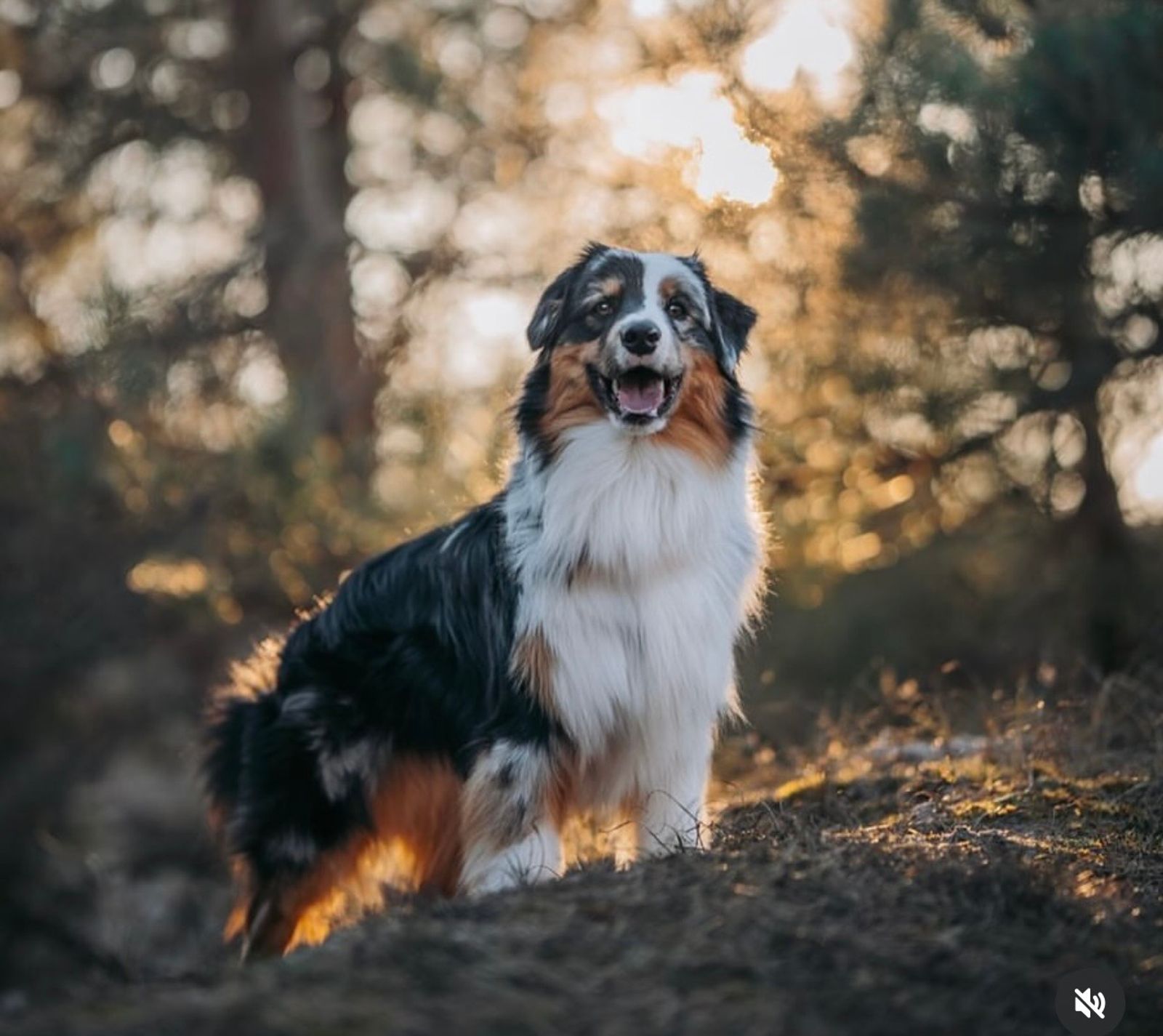
Deceptive Appearance: When Our Eyes Lie to Us
In genetics, we can sometimes feel deceived by our own eyes. Is it possible that a visually standard black or brown tricolor dog is actually a merle? Yes! This is called a cryptic (hidden) or phantom merle.
Genetically, a dog might carry the merle gene, but it barely reflects in their coat – perhaps the marbled pattern is hiding only under a white collar, on a docked tail tip, or the mutation is so weak that visually the dog looks like a completely standard-colored representative. Another reason is the dog's base color. For example, in light-coated (yellow, golden) dogs, the merle gene has no visible effect because it only disrupts black or brown pigment, not yellow.
Because of this, at first glance, everything might seem to be done responsibly: a breeder mates an obvious merle dog with what appears to be a standard tricolor. However, puppies with excessive white – double merles – suddenly appear in the litter. This happens because that "standard" dog actually passed on its hidden merle allele, and the offspring received this gene from both parents.
That is why all standard-colored dogs (especially males, who leave many offspring) are highly recommended to undergo genetic DNA testing so the merle gene can be definitively confirmed or ruled out. This is the only way to ensure the health of future generations and avoid unpleasant, health-related surprises.
Do Not Confuse With Merle: How Other Genes Deceive Our Eyes
As mentioned at the beginning, this article delves exclusively into the merle pattern and its effects. However, it is important to understand that a dog's coat is like a complex artist's palette where more than one gene is at work. Coat color and pattern can be strongly altered by other genes that are completely independent of the merle mutation.
One of them is the Dilute gene. Unlike merle, which randomly fades color in patches, the dilute gene acts like a filter – it evenly dilutes the dog's entire base body color (for example, a genetically black dog becomes an even gray/blue, and a brown one becomes light lilac).
Another crucial "artist" is the White Spotting gene. It acts like an eraser, "drawing" white socks, a chest, a collar, a facial blaze, or even massive white patches on the dog's body. It is very important not to confuse these genes with the marbled pattern. For instance, a strong expression of the white spotting gene can sometimes be mistakenly deemed a dangerous double merle (M/M). Or conversely – a broad white collar caused by the white spotting gene might simply hide the single merle spot underneath it, thus turning the dog into an "invisible" (cryptic) merle. Although all these genes (Merle, Dilute, White Spotting) have their separate mechanisms and operate independently, it is their combined dance that creates the unique masterpiece of appearance we see before us.
What is Merle Really? (A Scientific Approach)
Although we call it a color, merle is actually a coat pattern (a pigment modifier). For Australian Shepherds, it creates two main variations:
- Blue Merle: A genetically black dog whose black pigment is diluted in places by the gene, creating gray/bluish patches.
- Red Merle: A genetically brown/chocolate dog whose coat shows sandy or peach shades with dark brown spots.
Furthermore, the merle gene affects more than just the coat. It is directly responsible for the unique eyes of these dogs – heterochromia (different colored eyes) or "marbled" eyes (where brown and bright blue mix in a single eye) often occur. The gene can also "knock out" pigment in the skin of the nose, creating a "butterfly nose" (a nose dotted with pink spots).
Molecular Labyrinths: From the SINE Insertion to Allele Diversity
Scientifically, the merle pattern is a phenomenon that has been studied for a long time. The mutation was first discovered in 2006 when scientists identified a short insertion called SINE in the PMEL (or SILV) pigment gene.
This gene creates a special "scaffold" within the cells upon which pigment accumulates. The SINE insertion distorts this scaffold, rendering the cells unable to produce and distribute normal pigment. The strength of the mutation's expression depends on the length of the so-called "PolyA tail" (a chain of repeating DNA bases). The longer this tail, the more strongly the gene alters the dog's appearance.
In 2018, scientists Langevin and Murphy made a breakthrough by determining that there isn't just one, but 7 different merle alleles, which can form up to 28 combinations among themselves. This finally solved many genetic riddles for breeders.
The Merle Allele Spectrum: From Invisible to Harlequin
What do those numbers and "bp" letters mean next to each allele? Before examining the merle types, it is important to understand what the numbers next to them mean (for example, 200–230 bp). The letters "bp" stand for base pairs. Imagine that DNA is a massive book, and base pairs are the letters that make up the words (genes).
The merle mutation is like an extra word inserted into the dog's DNA with a long tail of the same letter "A" (which is why scientists call it a PolyA tail). The numbers indicate exactly how many "letters" (base pairs) this mutation tail consists of.
In genetics, a very simple rule applies: the smaller the number (the shorter the tail), the weaker the effect of the mutation. A short mutation cannot change the dog's appearance. Conversely – the larger the number (the longer the tail), the more strongly the gene "erases" pigment, creating a more striking marbled pattern or even whitening large areas of the coat.
Knowing this rule, let's see what lengths of mutation create the different dog patterns:
- m – "Non-merle" (Standard allele) This is the original, unaltered gene with no mutation (no SINE insertion). A dog with a combination of two such alleles (m/m) is standard-colored (e.g., solid black, brown, or standard tricolor). This is a state of genetic calm, and it is exactly these dogs that are the safest partners for breeding with marbled representatives.
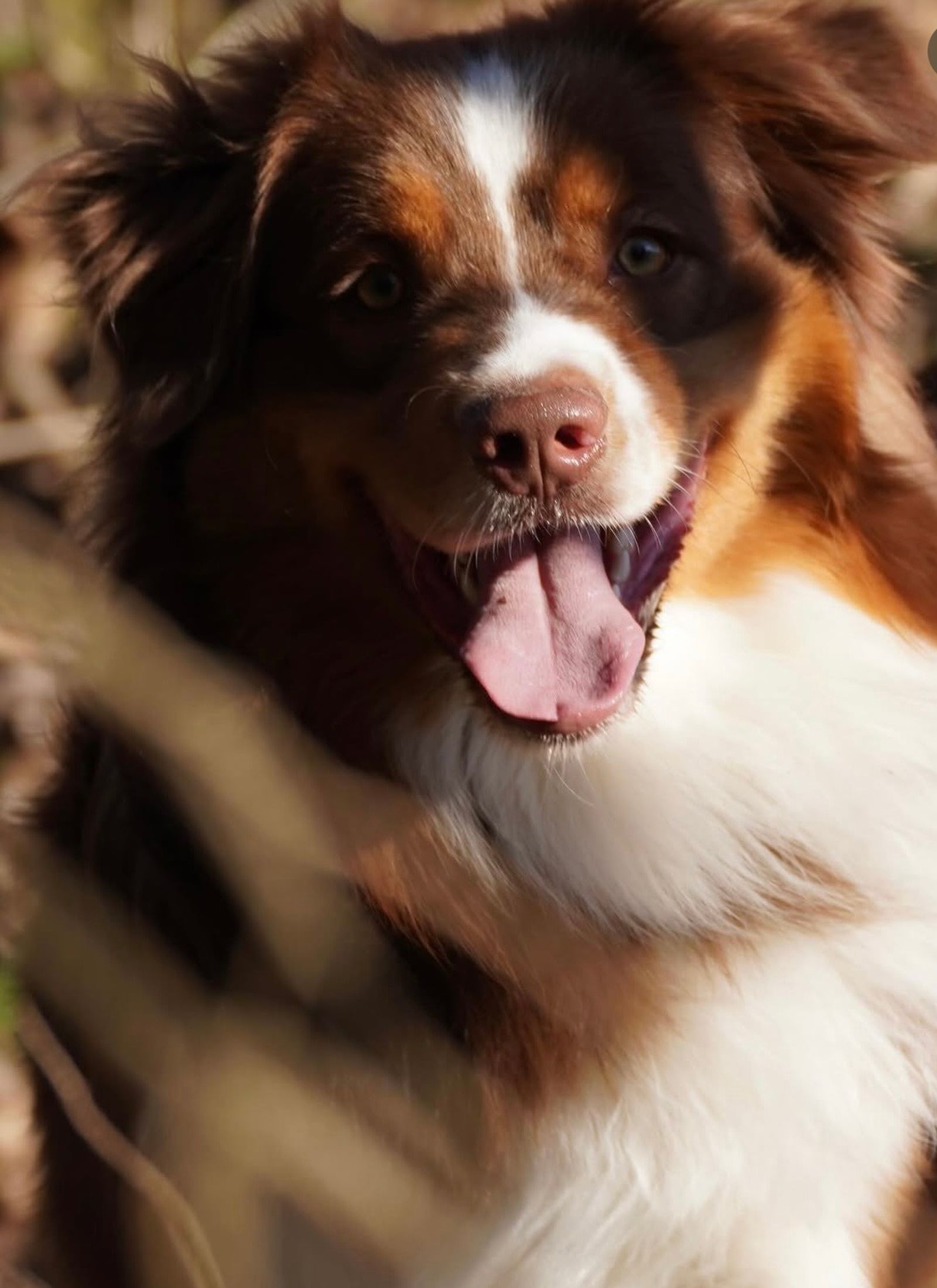
- Mc – Cryptic (hidden) merle (200–230 bp) The word "cryptic" means hidden. Although the dog genetically carries the mutation, the altered gene tail is so short that it has zero effect on the dog's appearance. The dog is solid-colored or a standard tricolor, with no hints of a marbled pattern. The most important news for breeders: this mutation poses no health risks, meaning dogs with the Mc allele can be safely mated with classic (M) merle dogs as if they were regular "non-merles."
- Mc+ – Cryptic merle + (231–246 bp) This is still a hidden gene that carries no health risks. In most cases, you won't notice any changes in appearance. Only very rarely, in long-haired breeds, might a slight change in pigment occur – the coat could look slightly faded or take on a faint brownish tint. Like those with the Mc gene, these dogs can confidently be paired with classic merle representatives.
- Ma – Atypical merle (247–254 bp) Here, the mutation tail is long enough to begin visibly altering the dog, though not as boldly as the classic gene. Instead of a distinct marbled pattern, these dogs might just look "faded," have a brownish tint, or a lighter undercoat. Light shading might be visible around the neck, ears, and tail, and the eyes can sometimes be blue. If two such alleles combine (Ma/Ma), small dark patches can appear in the coat. Even though they don't look like typical merles, they must never be bred with classic (M) or harlequin (Mh) alleles, as this immediately poses a health risk.
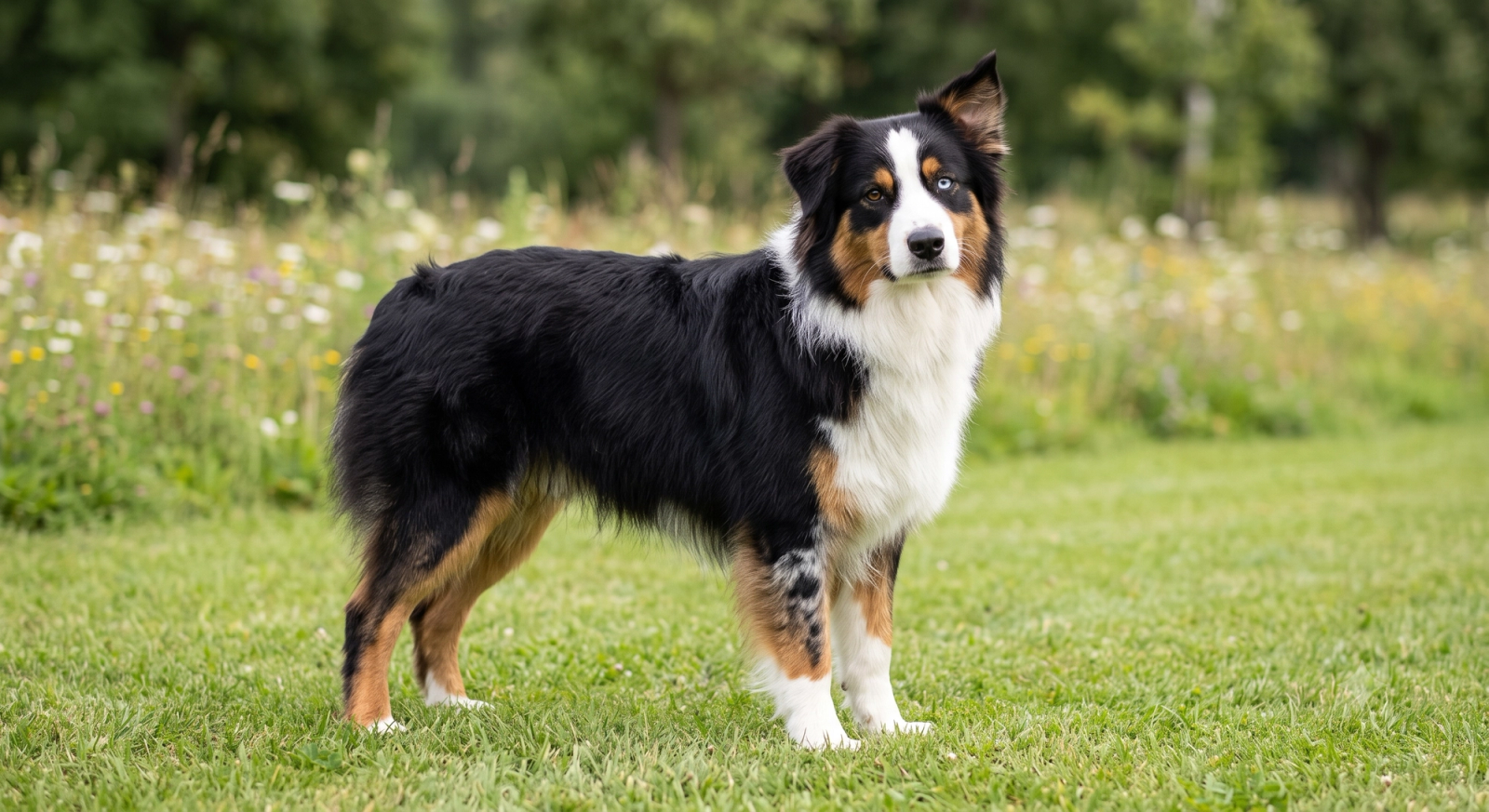
- Ma+ – Atypical merle + (255–264 bp) This allele creates an even more subdued, muted marbled pattern, sometimes accompanied by small dark spots and blue eyes. As the gene lengthens, the famous "Tweed" pattern can emerge – broader, evenly colored patches of various shades appear in the coat. This allele can also begin to dilute pigment all the way to pure white. Mating these dogs with classic (M) or harlequin (Mh) genes is also strictly not recommended due to the increased risk of disability.
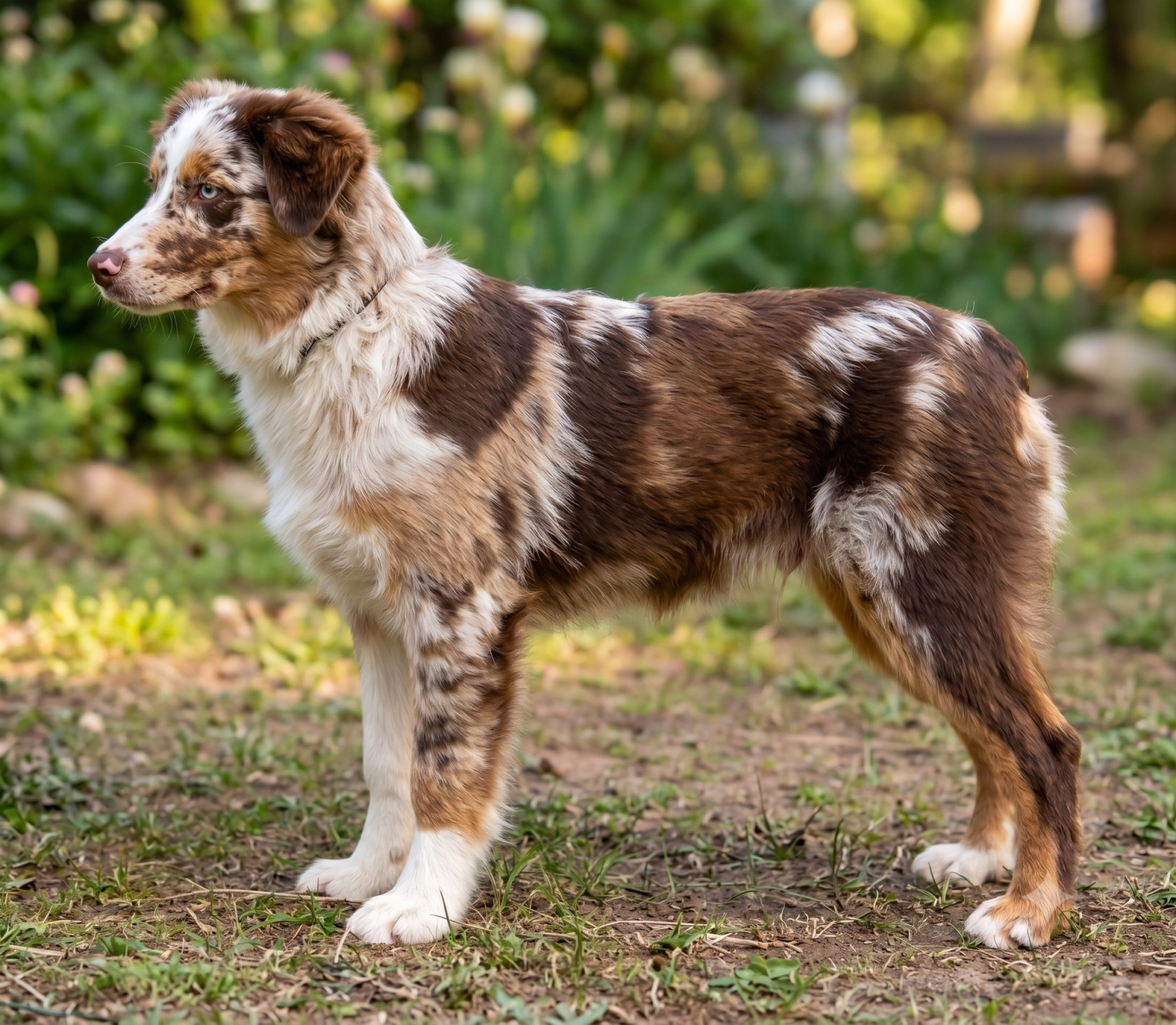
- M – Classic merle (265–268 bp) This is the true, standard mutation length that creates the striking, widely recognized marbled pattern we all know. Dark coat pigment is diluted in places to light grey or bluish shades, interspersed with fully colored spots, without diluting the pigment to pure white. This gene creates blue eyes and, depending on its combination with other alleles, can create "patchwork" or "Irish spotting" (white on the head, shoulders, and legs) patterns. When owning such a dog, strict breeding rules must be observed – it is only safe to breed them with m or Mc dogs to avoid the dangerous double merle (M/M) tragedy.
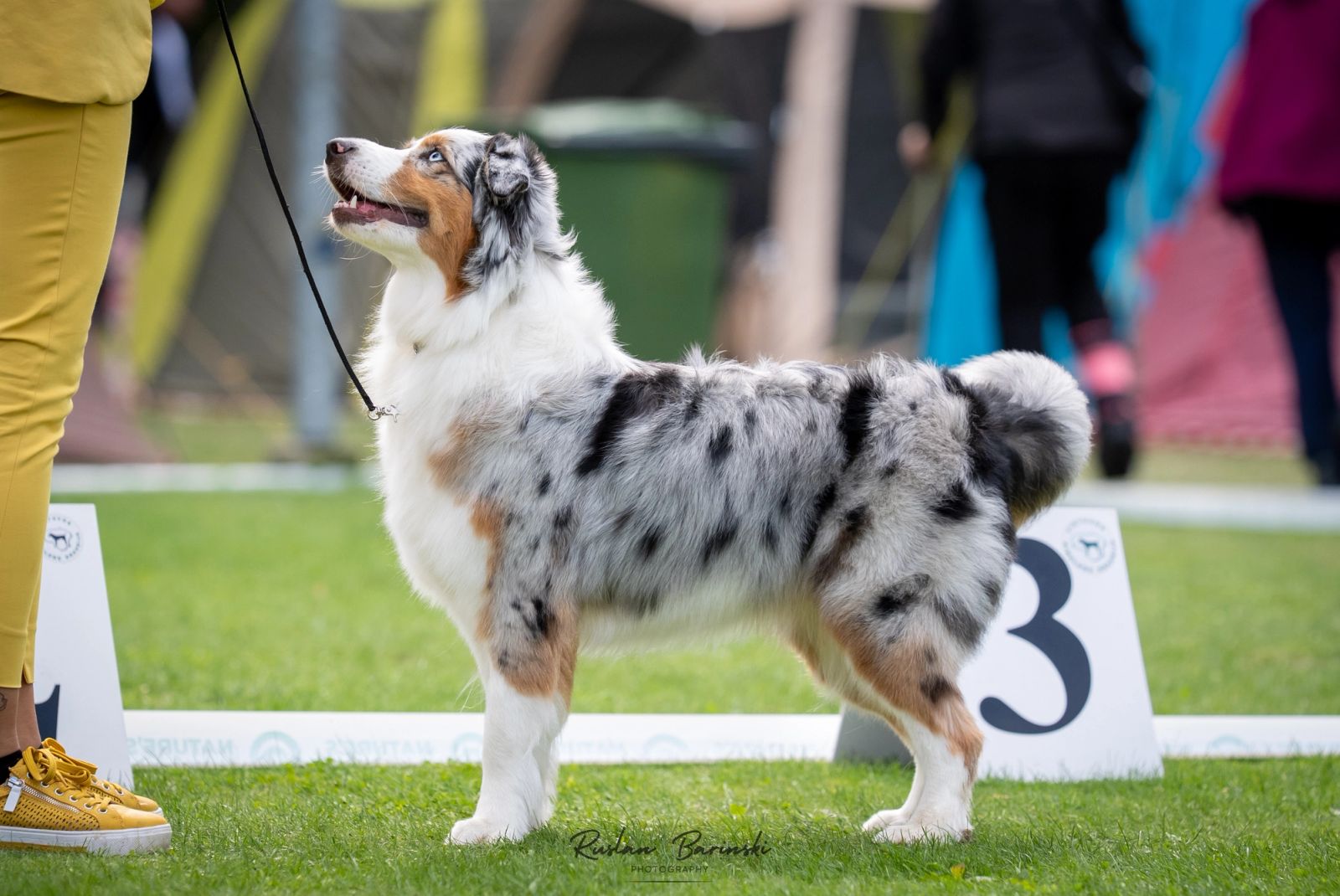
- Mh – Harlequin merle (269–280 bp) This is the longest, trickiest, and most unpredictable form of the mutation. The harlequin gene can manifest in two extremes. Sometimes it creates a "minimal merle," where the dog looks almost completely normal, with merle traits so minimal they are barely noticeable. At the other extreme, it creates the "shepherd harlequin," where the grey color is completely lost, turning into massive bright white patches. Dogs carrying this gene should never be paired with any allele other than M or Mc. Making a mistake here drastically increases the risk of the puppies losing their hearing and vision.
Today we know that a total of 14 allele combinations cause pigment deletion to white, and 8 combinations (e.g., M/M, M/Mh, Mh/Mh) pose a direct risk to the dog's health.
Double Merle (M/M): When Beauty Becomes a Genetic Tragedy
When the paths of two dogs carrying the merle gene cross and the offspring inherits the strong M allele from both parents (resulting in the M/M genotype), what geneticists and breeders call a double merle occurs.
At first glance, such puppies can look very unusual and even attractive. Excessive white dominates their coat – sometimes they are born almost entirely white with only a few isolated colored spots. The skin of their nose, lip edges, and eye rims are often completely pink (depigmented), and their eyes are pale blue. However, this abundant white color is not just another coat pattern. It is the body's warning signal, indicating a drastic lack of pigment with irreversible consequences.
Why is pigment linked to health? This is one of the most surprising mysteries in genetics. We usually think color is only for aesthetics. However, melanocytes (pigment cells) play a much more crucial role in the body than just "painting" the coat. They are critically important for the development of the nervous system, especially the inner ear and eyes, during the early embryonic stage.
When the production of melanocytes is blocked due to two M alleles, the puppy's sensory organs simply lack the "building materials" to form normally:
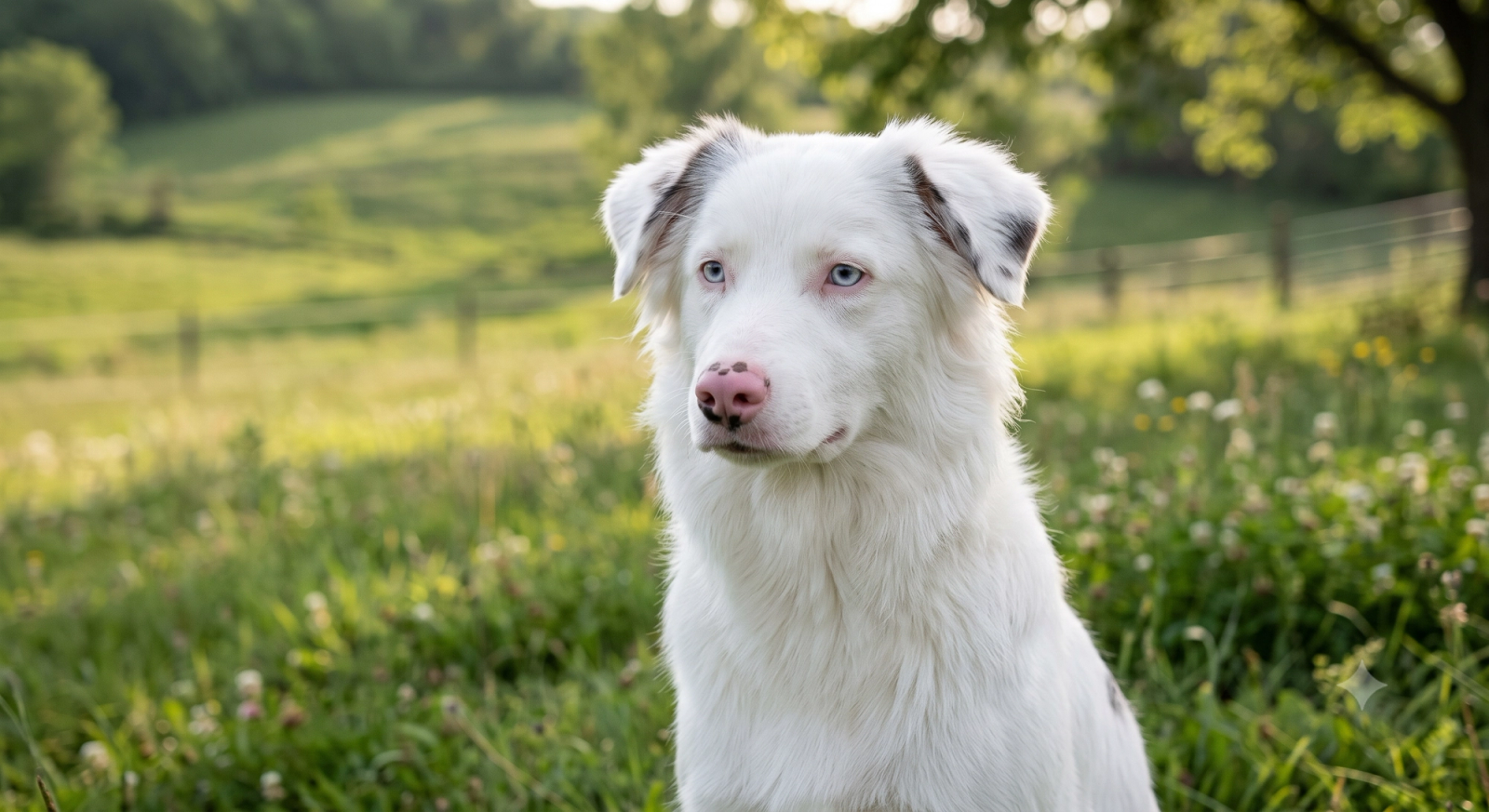
- Silence (Why are they born deaf?): Melanocytes in the inner ear act as a kind of "battery charger." They maintain the balance of potassium ions, which is necessary for auditory hair cells to transmit sound signals to the brain. When there are no pigment cells in the ear, the ion balance collapses, the auditory hairs wither, and the puppy remains deaf for life. Deafness can be unilateral or (in the case of double merles) most often bilateral.
- Darkness (Why do eye defects occur?): While the puppy's eyes are forming in the mother's womb, pigment cells help them grow and take on a proper structure. When these cells are missing, the eyes develop with defects. Double merle dogs often suffer from microphthalmia (abnormally small eyes), coloboma (clefts or fissures in eye tissues like the iris), off-center or deformed pupils (which can look like spilled stars), or even total anophthalmia (absence of the eyeball). This inevitably leads to partial or complete blindness.
Not Just Merle: Other Mutations That Alter a Dog's Appearance
As I mentioned at the beginning, this article delves exclusively into the merle pattern and its effects. However, it is important to understand that a dog's coat is like a complex artist's palette where more than one gene is at work. Coat color and pattern can be strongly altered by other genes that are completely independent of the merle mutation.
One of them is the Dilute (color dilution) gene. Unlike merle, which fades color in random patches, the dilute gene acts like a filter - it evenly dilutes the dog's entire base body color (for example, a black dog becomes an even gray/blue, and a brown one becomes light lilac).
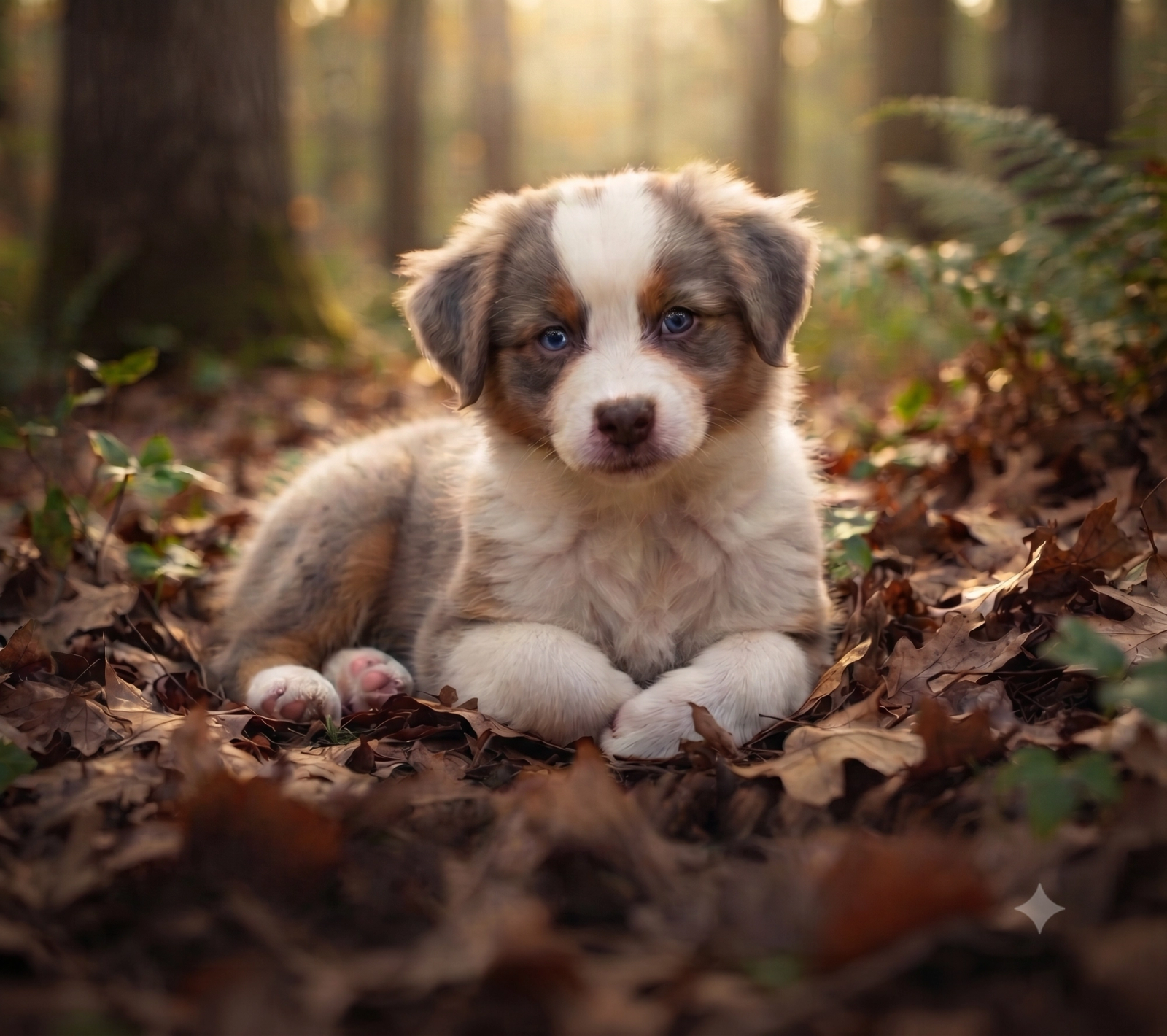
Another crucial "artist" is the White Spotting gene. It acts like an eraser, "drawing" white socks, a chest, a collar, a facial blaze, or even massive white patches on the dog's back. It is very important not to confuse these genes with the marbled pattern. For instance, a strong expression of the white spotting gene can sometimes be mistakenly identified as a dangerous double merle (M/M). Or conversely—a broad white collar caused by the White Spotting gene might simply hide the dog's only merle spot underneath it, thus turning the dog into an "invisible" (cryptic) merle. Although all these genes (Merle, Dilute, White Spotting) have their separate mechanisms and operate independently from one another, it is their combined dance that creates the unique masterpiece of appearance we see before us.
Merle Mosaic: Nature's Lottery in the Cells
As if genetics wasn't enough, merle mosaicism also exists. When cells divide, the DNA-copying enzyme can "slip" (replication slippage) while copying a long PolyA tail. Due to this error, the tail randomly lengthens or shortens.
As a result, cells with completely different merle genotypes form within a single dog's body! Such a dog is a genetic mosaic – its pattern becomes atypical and difficult to predict. More importantly: if this new mutation occurs in the reproductive cells, the dog might pass on to its offspring a completely different merle allele than the one it primarily carries.
Correct Pigmentation: Why Are Colors Essential for a Dog's Face?
When evaluating a merle dog, correct pigmentation is just as important as a beautiful coat pattern. It is worth remembering that regardless of whether it is a blue merle or a red merle dog, its genetic base color is black or brown. This means that the dog's nose, lip edges, and eye rims must match this base color—they must be fully dark (black or brown).
Breeders and owners must pay special attention to two critical areas—the eyes and ears:
- Eyes: The skin directly around the eyes must have pigment (be dark). If a puppy lacks color around the eyes and only white or pink skin is visible, it can indicate an increased health risk. While this by no means guarantees that the puppy will be born blind, such a condition is always a risk factor. Such a puppy requires an additional veterinary examination to ensure that the eye structure has developed correctly.
- Ears: The dog's ears should also be covered in colored pigment as much as possible. Completely white ears should be avoided. If a puppy happens to have one marbled ear and one completely white ear, a hearing test is necessary. If both ears are white, the risk of deafness increases even more.
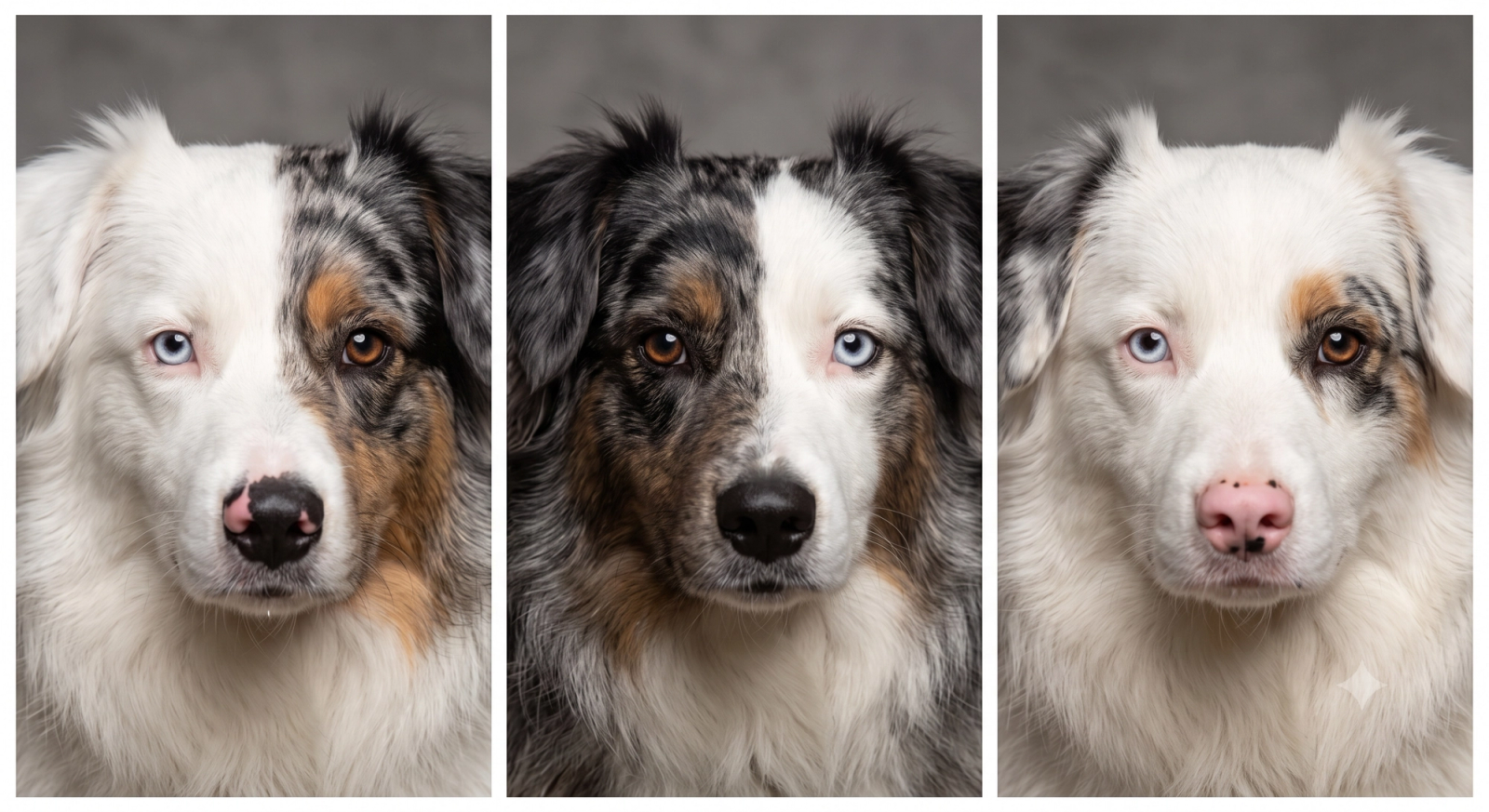
And what if a puppy is born with both white eye rims and completely white ears? This is one of the most difficult and risky scenarios. For such a puppy, it is mandatory to perform special hearing and vision exams as early as possible to know exactly whether it can see and hear.
Conclusion: Life is More Important Than Beauty
The merle coat pattern is undoubtedly one of the most striking and eye-catching phenomena in the dog world. However, as we can see from the genetic labyrinth we've explored, it is much more than a photogenic look, a fashion statement, or a unique exterior. It is an extremely complex, delicate, and sometimes highly tricky biological mechanism that does not tolerate guesswork or negligence.
Nature created this pattern with many secrets – from "cryptic" alleles invisible to the naked eye to unpredictable cellular mosaicism. For a long time, breeders had to rely solely on luck and visual assessment, which often resulted in painful mistakes. Today, the situation has fundamentally changed: we no longer have the right to risk "blindly." Modern DNA tests are no longer a luxury or a mere satisfaction of curiosity – they have become a mandatory, indispensable tool that allows science to reveal what the exterior tries to hide. Only by knowing the exact genetic code of each dog can we prevent double merle (M/M) tragedies and ensure that only healthy offspring see the world.
This responsibility falls not only on the shoulders of breeders but also on future owners. When choosing a puppy, especially a breed like the Australian Shepherd, it is crucial to inquire not just whether its coat meets your expectations, but whether the breeder has performed all necessary PMEL (SILV) gene tests. Public awareness and high standards are the best weapons against irresponsible breeding.
Ultimately, every marbled dog is a living reminder that cynology is the art of combining beauty with health, never sacrificing the latter. True love for dogs begins not with admiration for unique spots, tweed patterns, or icy blue eyes. It begins with a deep respect for life, for its fulfilling existence, and unceasing care for the dog's well-being. After all, the happiest dog is not the one that looks the most exotic in photos, but the one that can explore the world without pain and limitations – seeing it clearly and hearing its owner's voice.


